

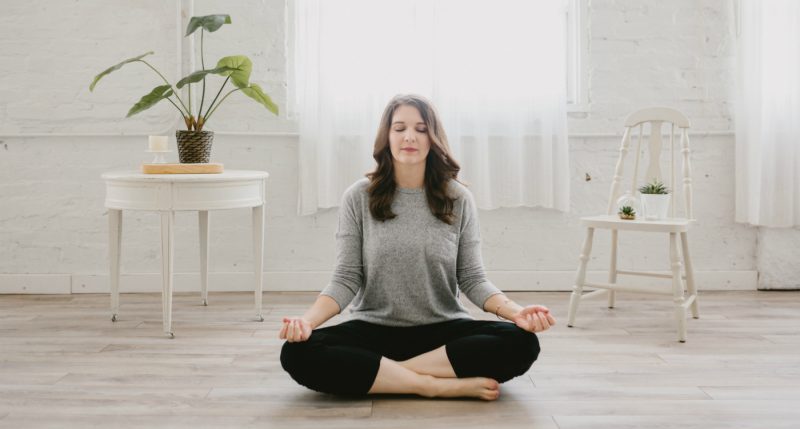
The Importance of Meditation in Your Yoga Practice for Mental Health
Introduction
Does stress overwhelm you from time to time, and do you struggle to maintain your mental balance? If so, incorporating meditation into your yoga practice could be your panacea. It’s no secret that yoga and meditation are powerful tools for mental health, but when they are practiced together, they offer exponential benefits. By the end of this post, you’ll understand why meditation is crucial to your yoga practice and mental health, and you’ll have practical solutions to integrate it into your routine.
Section 1: The Interplay between Yoga, Meditation, and Mental Health
So, how do yoga and meditation come together for mental health?
Yoga, derived from the Sanskrit word ‘Yuj’, means to bind or unite, symbolizing the union of body and consciousness. It’s not just about physical exercise. It is a holistic approach to health and well-being, and part of its purpose is to help the mind achieve a state of calm.
Meditation, on the other hand, is a practice where the aim is to focus the mind and eliminate the swarm of thoughts that may be crowding your mental state.
When you incorporate meditation into your yoga practice, you are taking a holistic approach to your mental health. By combining the physical movements of yoga with the mindfulness of meditation, you’re not just keeping your body fit but also sharpening your mental concentration, reducing stress, and fostering inner peace.
Studies have even shown that yoga, when paired with meditation, can decrease depression, anxiety, and stress levels, enhance mood, and improve mental health outcomes.
Section 2: Overcoming Hurdles to Meditation
Some common challenges to incorporating meditation into a yoga routine include struggling to quiet the mind, finding the time for meditation, and persevering with the practice. But rest assured, there are solutions to these barriers.
You don’t have to completely empty your mind to meditate; the key is to focus and bring back your attention whenever it wanders. Short meditations performed consistently can be more beneficial than long, infrequent sessions. So, carve out a little time in your schedule, perhaps in the morning, for a few minutes of meditation.
Section 3: Integrating Meditation into Your Yoga Practice
Integrating meditation into your yoga practice is simpler than you might think. Begin your yoga session with a few minutes of meditation to anchor the mind and prepare the body. You could experiment with various meditation techniques, such as mindfulness, focusing on a word or phrase (mantra), or visualizing an image or scene.
A simple routine might look like this: Begin with 5 minutes of seated meditation, focusing on your breath, followed by a series of yoga poses, and then end with Savasana (corpse pose) while maintaining a meditative state.
Section 4: Sustaining Your Yoga and Meditation Practice
The secret to maintaining your yoga and meditation practice is consistency. Keep track of your progress by keeping a journal or use an app. Remember to be patient with yourself; the benefits accrue over time and not overnight. And importantly, see this practice as self-care rather than a task.
Conclusion
The synergy of yoga and meditation provides a comprehensive approach to mental health. It offers physical, mental, and emotional benefits and serves as a powerful tool to combat stress, anxiety, and other mental health issues. To maximize these benefits, you need to commit consistently to this practice, overcoming challenges along the way. By engaging in this practice, you are prioritizing and investing in your mental health and well-being—one pose and breath at a time.
So why not give it a try? Start tomorrow morning with a few minutes of quiet meditation followed by your yoga practice. And don’t forget to share your experiences and reflections with us in the comments below. With regular practice, notice how you cultivate resilience and mental peace from within.


