

Introduction
Are you a yogi seeking to deepen your stretches and poses? Or perhaps you’re new to yoga and feel like you’re missing out on some range and depth. Whatever your experience level, yoga straps can make a real difference in your practice. They offer the ability to elongate your limbs, reach in poses that might have been impossible, and maintain proper alignment. So, are you ready to take your yoga practice to a higher level?
Section 1: The Benefits of Using Yoga Straps
Yoga straps are more than just handy props – they’re a yoga companion, a must-have in your yoga arsenal. They not only facilitate deeper stretches but also help maintain correct posture and alignment, which is crucial in getting the most out of your yoga practice. Yoga straps can transform your practice, opening doors to more advanced poses and offering support when you need it. Studies have even shown that using yoga props can boost your confidence, enhance your ability to perform challenging poses, and reduce the risk of injury.
But that’s not all! Anecdotal evidence from yogis worldwide claims the use of yoga straps helps them feel more grounded, assists in steadying their balance, and increases concentration levels during their practice.
Section 2: Universal Uses and Applications
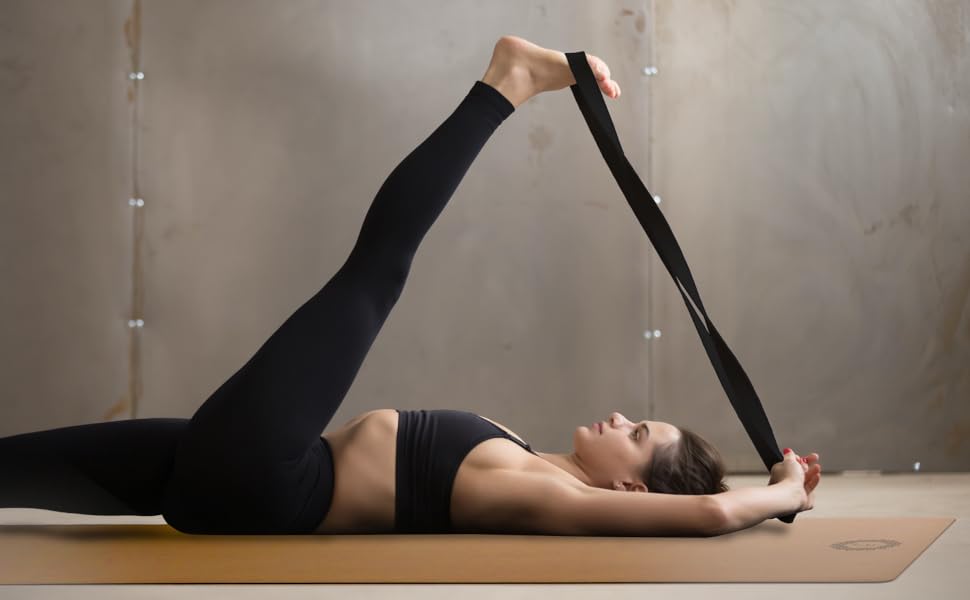
Despite their straightforward design, yoga straps are highly versatile. They can be used in a variety of ways to enhance flexibility and range of motion. For instance, you can use a yoga strap to deepen a hamstring stretch, open your shoulders, or achieve a bind in certain poses. They’re also great for maintaining alignment in poses like Tadasana (Mountain pose) or keeping your limbs together in poses like Navasana (Boat pose).
What’s great is that you can use yoga straps regardless of your yoga style – be it Ashtanga, Hatha, Iyengar, or even Restorative yoga, the yoga strap is flexible and adaptable for all!
Section 3: Choosing the Best Yoga Strap
When choosing a yoga strap, consider the length and the type of buckle. A 6-foot strap works for most people and poses. However, if you’re taller or like to use your strap for binds and stretches, an 8-foot or 10-foot strap may be more your speed.
On the buckle front, there’re generally three types: cinch buckles, D-ring, and quick-release. Cinch buckles and D-rings are more secure, while quick-release buckles offer quick adjustment which can be handy in a fast-paced class.
Some of the most popular yoga straps include Clever Yoga Strap, Limber Stretch Advanced Yoga Flexibility Straps, and Infinity Strap. These straps are well-rated for their quality, durability, functionality, and affordability.
Section 4: Incorporating Yoga Straps into Your Practice
If you’re new to using a yoga strap, start by using it in a simple pose like Paschimottanasana (Seated Forward Bend). It can help you lengthen your spine and deepen your stretch without straining your back. As you grow more comfortable with your strap, start incorporating it into standing poses like Natarajasana (Lord of the Dance Pose). Remember, the key is not to rush – yoga is a journey, not a destination.
For consistency, make using your yoga strap a habit. Incorporate it in your regular practice and keep experimenting with different poses. Like anything else, the more you use it, the more comfortable you’ll become.
Conclusion
A quality yoga strap can be the tool that removes limitations, deepens your stretches, helps maintain posture alignment, and maximizes your yoga benefits. Whether you’re a beginner or an experienced yogi, a good yoga strap offers the extension and support to make poses more accessible and enjoyable. So why not set a goal? Commit to using your yoga strap in at least one pose every day. Not only will this deepen your practice, but you’ll also fully experience the enhanced flexibility and stretching that a yoga strap brings. Stretch, reach, hold, breathe, repeat, and remember – every little progression counts. You are stretching not only your body but also your limits, one pose at a time.


